

Scan to download Babaoo Attention
.svg)


Everything you need to know about Psychomotor therapists

When should you see a psychomotor therapist?
Psychomotor therapy explained to parents
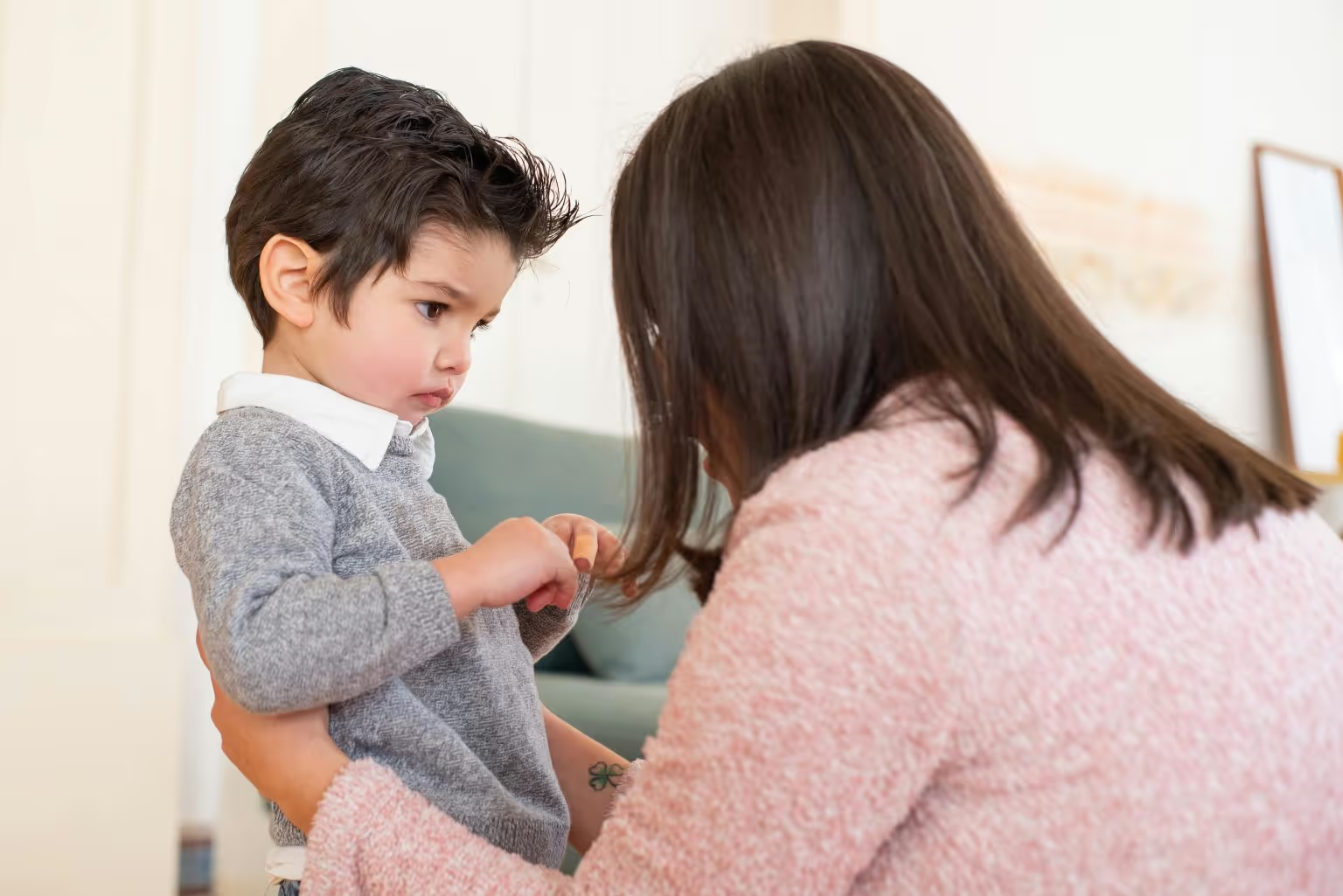
Signs I notice in my child.
Are you worried about certain behaviors or difficulties in your child's motor, emotional, or relational development?
- Clumsiness, frequent falls, difficulties with coordination or balance
- Motor restlessness, a constant need to move, or, conversely, great slowness in everyday movements
- Difficulty organizing oneself in space or orienting oneself in time
- Body tension, tightness or poor posture
- Graphic or writing difficulties (pencil grip, fatigue, slowness)
- Hypersensitivity or hyposensitivity to sensory stimuli (noises, textures, contacts…)
- Difficulty expressing or regulating emotions through the body (anger, withdrawal, physical anxiety, etc.)
- Body image disturbances, low self-awareness, or difficulty in connecting with one's body
- Concern about a delay in psychomotor development (walking, grasping, fine motor skills…)
- Need specific support in the context of a neurodevelopmental disorder (ADHD , ASD, learning disabilities , etc.)
The role of the psychomotor therapist.
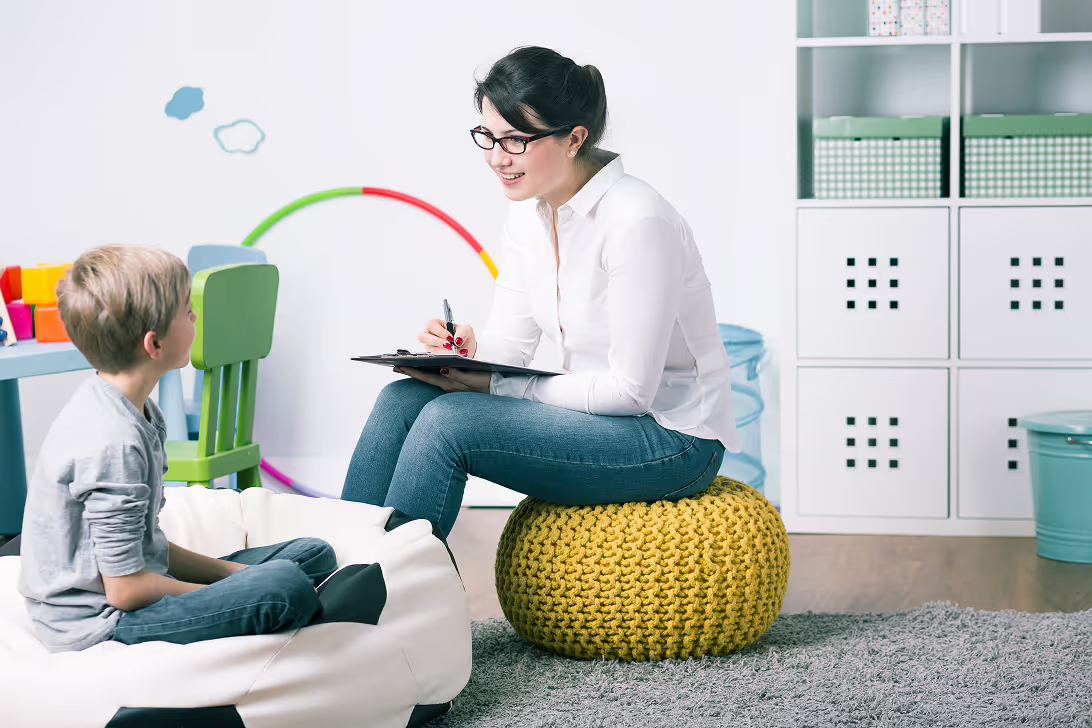
A psychomotor therapist is a healthcare professional specializing in the connections between the body, emotions, psychomotor development, and the relationship with the environment. Their goal is to help children (and adults) regain physical and emotional harmony to improve their daily lives. They do not make medical diagnoses but conduct a psychomotor assessment to observe, analyze, and understand physical, motor, sensory, or emotional manifestations in order to offer personalized support.
The psychomotor therapist acts as a bodily mediator , using play, movement, relaxation or body expression to help the child to know themselves better, to calm down and to develop.
Objectives of sessions with a psychomotor therapist.
The psychomotor therapist supports your child in developing essential psychomotor skills for their well-being and development, such as:
- Gross and fine motor coordination
- Balance and tone
- Body schema and self-awareness
- Orientation in space and time
- Emotional regulation through the body
- Emotional regulation through the body
- Graphomotor skills and prerequisites for writing
- Body confidence and self-esteem
🎯 Objective : to enable the child to feel better in their body , to gain autonomy and to better regulate their emotions and actions in their environment.
Areas of intervention of the psychomotor therapist.
The psychomotor therapist works with children experiencing difficulties in their psychomotor development, with or without a diagnosis. They provide individualized and supportive guidance:
- Psychomotor developmental delays (walking, fine motor skills, coordination…)
- Muscle tone or posture disorders (hypotonia, hypertonia…)
- Disorders of spatial and temporal perception
- Handwriting and graphic design disorders
- Disorders of emotional regulation (anxiety, anger, inhibition…)
- Attention deficit hyperactivity disorder (ADHD)
- Autism spectrum disorders (ASD), with or without intellectual disability
- Learning disabilities (dyspraxia, dysgraphia, etc.
- Difficulties adapting to school or in relationships with others
The psychomotor therapist helps the child to strengthen their resources and adapt in order to overcome their physical or emotional blocks, and promote better integration into their daily life.
Missions of the psychomotor therapist
The psychomotor therapist intervenes in a comprehensive and individualized manner to support the child in:
- The development of her motor and sensory skills
- Working on body schema , body image and self-awareness
- The acquisition of spatio-temporal reference points (locating oneself in space, orienting oneself in time)
- The expression and regulation of emotions through the body
- Supporting concentration and attention through movement
- The development of fine motor skills and graphomotor skills
- Strengthening self-confidence and autonomy
- Parental guidance to better understand the child's bodily needs
The psychomotor therapist works in conjunction with the family, teachers and other professionals (speech therapists, psychologists, occupational therapists, etc.) to create a coherent and supportive environment around the child.
Methods and tools used by psychomotor therapists
The psychomotor therapist uses a physical, playful, and progressive approach, centered on the pleasure of action and the recognition of successes. Their tools are varied and adapted to each individual:
- A complete psychomotor assessment to evaluate skills and identify needs
- Motor games to work on coordination, balance, posture
- Sensory and motor pathways to explore sensations and movement
- Graphomotor skills : activities to support handwriting and motor precision
- Relaxation, breathing, and body techniques to soothe tension and manage stress
- Body expression and symbolic games to explore emotions and connection with others
- Work on rhythm, laterality and spatial structuring
How to prepare my child for a visit to the psychomotor therapist
Psychomotor therapy explained to children, by children!
What is an psychomotor therapist?
A psychomotor therapist is someone whose job is to help your body and mind work better together. Through games, movements, and fun activities, they will help you feel more comfortable in your body and better manage your emotions.
Their goal: for you to gain confidence and balance, and to be proud of yourself in everything you do!
What happens during a session with a psychomotor therapist?
- We start by moving… or not!
👀 The psychomotor therapist will first observe how you play, draw, move, or do simple exercises. This helps them better understand how you use your body and how you feel. No need to be perfect, there won't be any grades! They're there to help you, not to judge you! - Understanding your body and emotions
🧠 The psychomotor therapist helps you better understand how your body works, your balance, your way of moving… but also what you feel inside. - Express yourself, have fun, progress!
🎨 The sessions often resemble moments of play, relaxation, or creativity. Through varied activities (obstacle courses, games, relaxation, drawing…), you learn to better control your movements, concentrate, and even feel calmer. - And between sessions?
🏠 The psychomotor therapist can suggest some tips or small challenges to try at home or at school. The most important thing is that you progress at your own pace, with enjoyment… and pride!
Where does a psychomotor therapist work?
A psychomotor therapist can work in hospitals, care centers, specialized institutes, nurseries, schools, or in a private practice. They often work as part of a team with other professionals (speech therapists, neuropsychologists, teachers, etc.).
Which Babaoos will you discover with the psychomotor therapist? What games will you play?
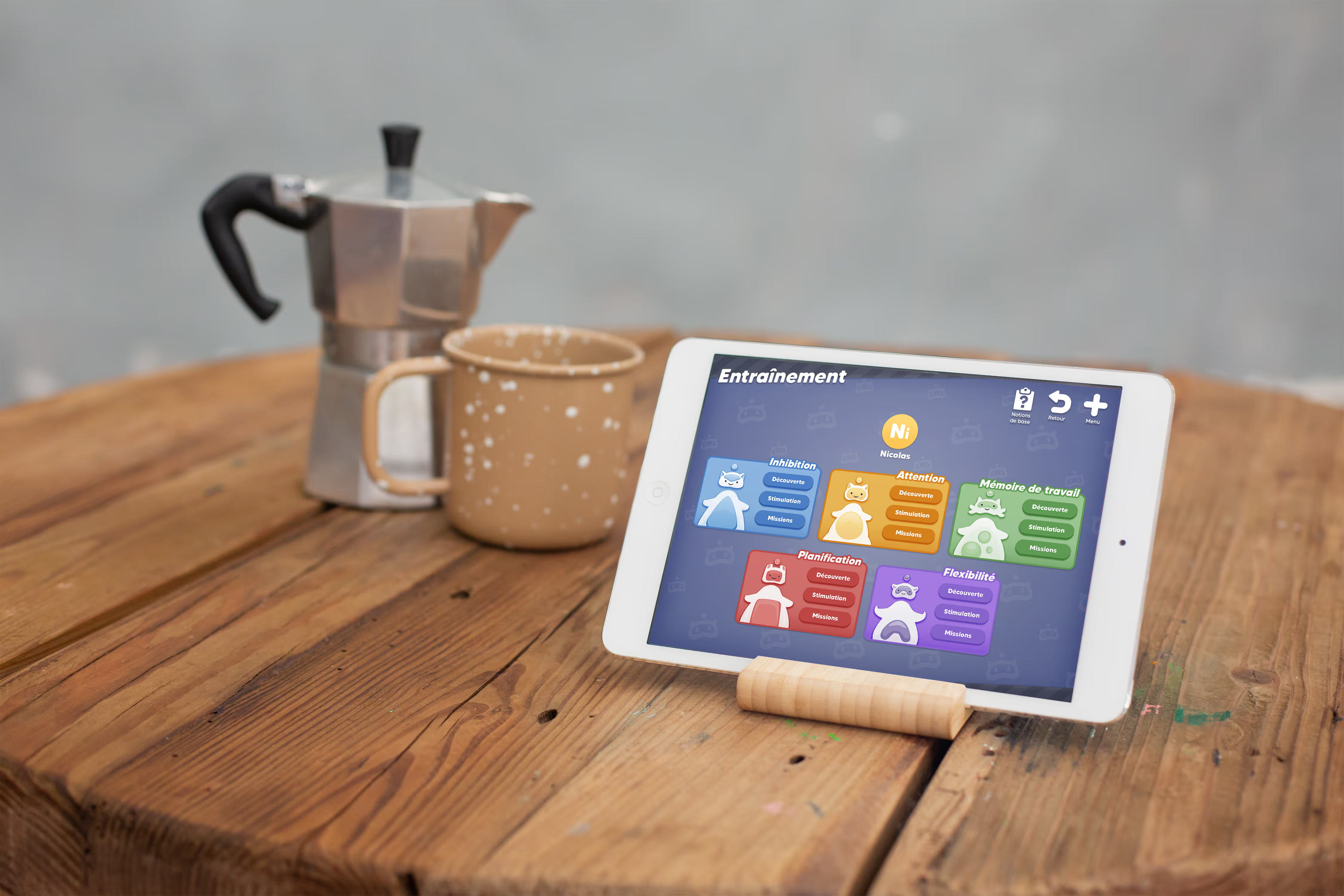
At the psychomotor therapist's office, you will meet 5 super Babaoos: clever little characters who help you to better understand your body and brain.
- Inhi, the master of inner calm. He will help you to put your body on pause, to not rush, and to think before you act.
- Atteni, the friend of attention. She will show you how to stay focused, even when there are lots of things around.
- Memtra, the working memory specialist. Thanks to it, you will learn to remember instructions, choreography, or the order of a route.
- Flexi, the coolest of the Babaoos. She helps you not to get discouraged when a game or exercise changes. She shows you how to adapt easily.
- Plano, the king of organization. With him, you will learn to anticipate your actions, to organize your movements, and to orient yourself in time and space.
🎮 Thanks to these Babaoos, you will move, have fun, concentrate and feel more and more comfortable in your body!
Day in the life of a psychomotor therapist
Behind the scenes of psychomotor therapy.
The challenges of being a psychomotor therapist
The psychomotor therapist is the superhero of the body, movement, and emotions!
Thanks to their in-depth knowledge of psychomotor development, they help children become more at home in their bodies, regulate their energy, coordinate their movements… and rediscover the joy of moving, learning, and expressing themselves.
Every day, they face numerous challenges to best support children:
- 🕒 Psychomotor assessment, an essential but demanding step: observing muscle tone, posture, coordination, emotions and interactions requires time, appropriate tools and a real finesse of analysis.
- 🔄 Transfer of acquired skills, a key issue: how to ensure that the progress made in the psychomotor skills room continues in the playground, at home or at school?
- 🎮 Motivating children to engage in physical activity: moving, repeating, coordinating movements, or concentrating isn't always easy. Sessions need to be fun and rewarding to stimulate participation, without pressure or discouragement.
Executive Functions: why work on them in psychomotor therapy?
- 🔵 Inhibitory Control: to help the child master their body to adjust their movements, but also to learn to resist distractions, to pause before acting, to wait their turn…
- 🟡 Attention: to maintain engagement in a motor activity, follow instructions, focus on your sensations.
- 🟢 Working Memory: to remember a sequence of gestures or the steps of a journey.
- 🟣 Cognitive Flexibility: to adapt to a changing rule of the game, to a modified course.
- 🔴 Planning / Organization: to anticipate and structure one's motor actions in space and time.
Babaoo: the app that helps psychomotor therapists work on Executive Functions
A tool developed with cognitive neuroscience experts.
Babaoo supports you
Babaoo is a fun and scientifically validated app designed to stimulate executive functions and support children's cognitive, motor, and emotional development. It offers comprehensive support to help children learn more about themselves and develop their physical and cognitive skills, through:
- Metacognitive content that can be integrated into short sessions.
- Highly targeted mini-games to raise awareness , automate and contextualize.
- Missions to be carried out in real life, to promote the transfer and involvement of the child's environment, between and after the sessions.
Features that psychomotor therapists will find useful
Babaoo offers several modes that can support your work during the session and between sessions with the child:
🎯 Training Mode
- All the basic concepts you need to know about Executive Functions (and explained in a way that's easy for a child to understand!)
- Targeted mini-games to stimulate executive functions
- A fun and progressive approach that allows children to practice with pleasure while developing their Metacognition
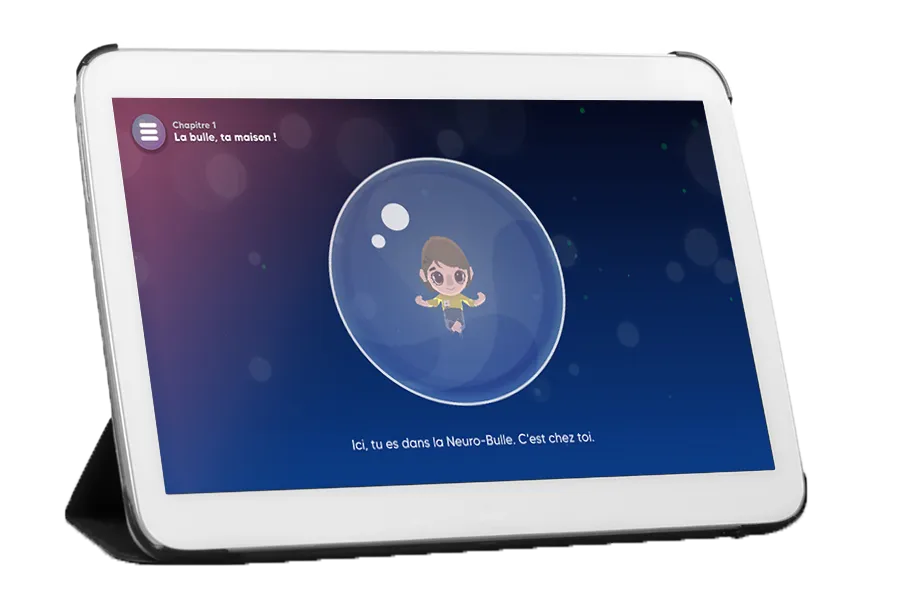
🧠 Adventure Mode
- An interactive story allowing the child to embark on an exploration of their brain and motor skills, punctuated by quests in which the child actively discovers and exercises their motor control skills.
- An engaging and independent way to discover, train and transfer motor skills into everyday life.
🚀 Missions
- Simple and concrete challenges to tackle at home or at school, to encourage the transfer of acquired knowledge to real-life situations.
- An effective way to involve parents and teachers in the child's progress, in connection with the psychomotor objectives worked on in session.
📊 A multidisciplinary tool
- Suitable for use by speech therapists, learning specialists, teachers…
- Which promotes a holistic and coherent approach centered on the child
Help your child master Attention
Short, guided sessions to develop Attention and Self-control, at their own pace.