

Scan to download Babaoo Attention

.svg)


Everything you need to know about Occupational therapists



When should you see an occupational therapist?
Occupational therapy explained to parents
Signs I notice in my child.
Your child is showing these signs:
- Difficulties with writing, cutting, buttoning, tying shoelaces…
- Unusual grip on the pencil or cutlery, imprecise gestures
- Strong reactions to certain textures, noises, smells or sensations (food, clothing, materials to touch…)
- Difficulty organizing or planning one's actions
- Difficulty paying attention or staying focused
- Impulsive behavior, emotions that are difficult to regulate
- Difficulty playing with others, sharing, or waiting one's turn
- Rapid fatigue or frustration with school or daily tasks
The role of the occupational therapist.
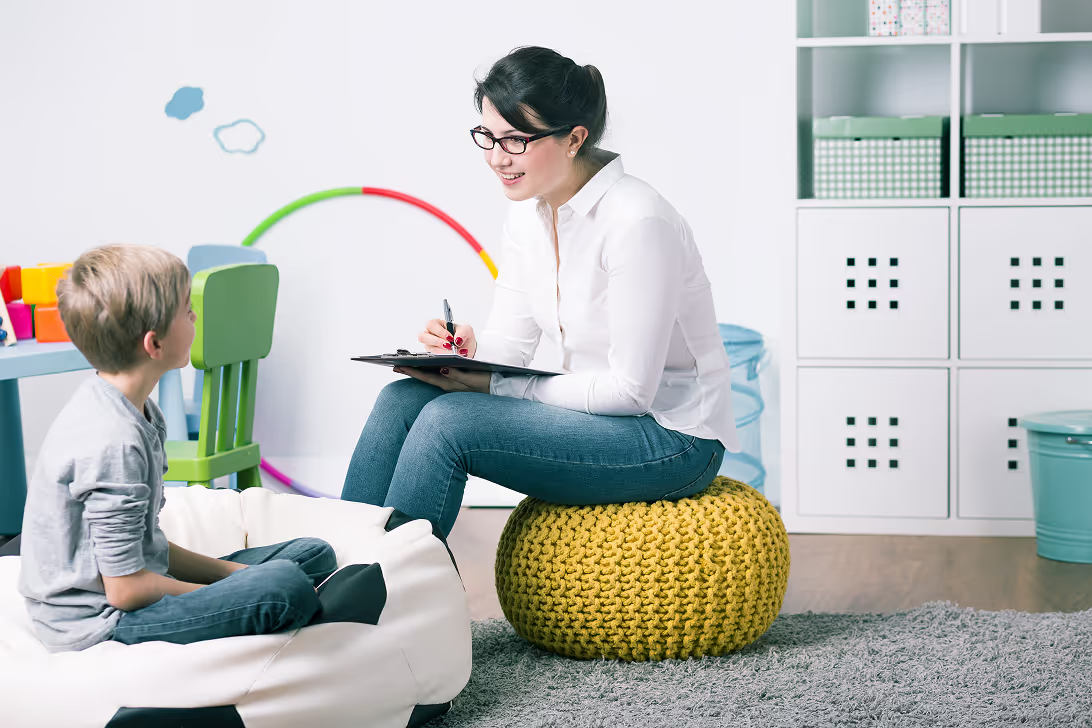
An occupational therapist helps children gain independence in their daily activities .
Whether it's learning to write, dressing themselves, or improving their organization , they give them the tools to succeed with greater ease and confidence.
Their approach allows for the adaptation of tools, postures, and habits so that each child can progress at their own pace and overcome their difficulties.
Objectives of sessions with an occupational therapist.
The occupational therapist supports your child in developing essential skills such as precision and coordination of movements, attention and planning .
Whether it's holding a pencil, taking notes, managing time, or using a computer , the occupational therapist offers practical tools and adapts the learning environment.
🎯 Objective : to transform everyday difficulties into small successes, then into great victories.
Areas of intervention of the occupational therapist.
Occupational therapists support "atypical" children when these atypicalities affect their autonomy in daily, school, or leisure activities:
- Learning disability such as dyslexia, dyspraxia (DCD), dyscalculia
- ADHD
- A motor or psychomotor disability
- A disruption in the development of Executive Functions
Missions of the occupational therapist
The occupational therapist intervenes in:
- Support for sensory development
- The development of motor skills (precision, coordination)
- Developing independence in everyday activities (dressing, eating, writing, playing, etc.)
- Adapting to the school environment
- Well-being and emotional management
Methods and tools used by occupational therapists
Occupational therapists employ a variety of intervention methods, drawing on several approaches:
- Sensory stimulation techniques : modeling clay workshops
- Fun exercises and adapted games: puzzles, construction games, rhythm games…
- Activities that stimulate precision , coordination and control of movements .
- Motor skills course to encourage the child to move in different ways depending on their environment
- Adapting the environment (school, home)
- Advice and support for parents
How to prepare my child for a visit to the occupational therapist
Occupational therapy explained to children, by children!
What is an occupational therapist?
An occupational therapist is a bit like a coach for the brain and body !
Their role is to help children (and adults too) to better control their movements so they can be more comfortable in their everyday activities.
What happens during a session with an occupational therapist?
- We start by observing!
📖 The occupational therapist will first ask you questions to better understand what is easy or difficult for you in your daily activities: writing, getting dressed, playing, eating… They may also ask you to do a few small exercises to see how you move and how you use your hands (don't worry, it's just to get to know you better!) - Next, you'll investigate how your body and brain work together.
🔎 An occupational therapist is an expert in movement, coordination, and sensation. They will help you understand how your body works, why some things feel easier or harder, and how to improve them. - Train, but above all, play!
🎲 Just as a coach helps an athlete improve, the occupational therapist will offer you games and exercises to train your body and hands. - And then what?
✅ Between sessions, he might give you little tasks and tips to try at home or at school.
Don't worry, it's all gradual and adapted to your pace! The important thing is to move forward step by step, have fun while learning, and celebrate every success! 😊
Where does an occupational therapist work?
Sessions with an occupational therapist can take place in hospitals, specialized centers, schools, or even directly in people's homes!
Which Babaoos will you discover with the occupational therapist? What games will you play?
At the occupational therapist's office, you will discover 5 Babaoos: the 5 super-allies of your Brain!
- Inhi is the expert in controlling actions and thoughts. Inhi will teach you to pause and think before you act!
- Atteni is the guardian of your attention. With Atteni, you will learn to focus your attention in the right place, at the right time, for as long as it takes.
- Memtra is your ally whenever there's a lot of information involved. Thanks to Memtra, you'll learn to manipulate words, images… without losing them along the way!
- Flexi is the most zen of the Babaoos. If you lose your composure when the instructions change or your first idea doesn't work, don't panic! Flexi will teach you how to adapt to find another solution.
- Plano is always there to help you solve problems. Plano will teach you how to organize your work, step by step, and how to control each step. He's undoubtedly the most organized of the Babaoos!
With each Babaoo, discover and practice through play to develop reflexes that will allow you to be more comfortable at school, succeed and gain confidence.
Day in the life of an occupational therapist
Behind the scenes of occupational therapy.
The challenges of being an occupational therapist
The occupational therapist is the superhero of independence !
Thanks to their expertise, they help children overcome motor, sensory, and autonomy difficulties by offering concrete and personalized solutions. Their role is essential in improving the child's quality of life, enabling them to better integrate into their daily environment, and developing skills for the rest of their life. They are superheroes because they face numerous challenges every day.
- It's a race against time : each patient has specific needs, but time is of the essence! Optimizing each session for maximum impact is her daily struggle!
- Skills transfer : learning a technique in a session is good; using it in real life is better! Thanks to his guidance, he enables children to be independent in their daily lives, and for their entire lives!
Executive Functions: why work on them in occupational therapy?
- 💡 Inhibitory control: why work on this in occupational therapy? A child who acts too quickly can make mistakes. By working on inhibitory control, the child learns to master their body to adjust their movements. Thinking before acting becomes more systematic, which improves the quality of their actions and decisions.
- 💡 Attention: why work on this in occupational therapy? A child who has difficulty concentrating struggles to follow a task or organize their actions. Improving attention allows them to better focus on what is important and to complete tasks in a more targeted and efficient way.
- 💡 Working memory: why work on this in occupational therapy? Working memory helps children retain information in the moment, such as remembering instructions or a step in a game. By strengthening their working memory, children become more independent and precise in their actions.
- 💡 Cognitive flexibility: why work on this in occupational therapy? Cognitive flexibility helps children adapt to new or changing situations, such as switching from one exercise to another or daring to try a different approach when a method isn't working. The more mentally flexible a child becomes, the more they gain autonomy, confidence, and the ability to adapt to environmental constraints.
- 💡 Planning and organization: why work on this in occupational therapy? Planning and organization are essential skills for completing a task from start to finish in a structured and efficient manner. Some children struggle to organize their actions or anticipate the steps of a project. Working on this skill helps them better structure their activities, whether they are daily tasks or schoolwork.
Babaoo: the app that helps occupational therapists work on Executive Functions
A tool developed with cognitive neuroscience experts.
Babaoo supports you
Babaoo is the fun and science-based app that stimulates executive functions and develops metacognition in both neurodivergent and neurotypical children. It offers a turnkey learning path to mastering each executive function through:
- Metacognitive content that can be integrated into short sessions.
- Highly targeted mini-games to raise awareness , automate and contextualize all the skills that allow children to better control their bodies to adjust their movements.
- Missions to be carried out in real life, to support the transfer, between and after the sessions.
Features that occupational therapists will find useful
Babaoo offers several modes that will interest you during the session and between sessions with the child:
🎯 Training Mode
- Fun mini-games of progressive difficulty, to stimulate each Executive Function in a targeted way.
- A toolbox to understand how to use it on a daily basis.
- A common and accessible vocabulary that will speak to children, their parents and their teachers.
🧠 Adventure Mode
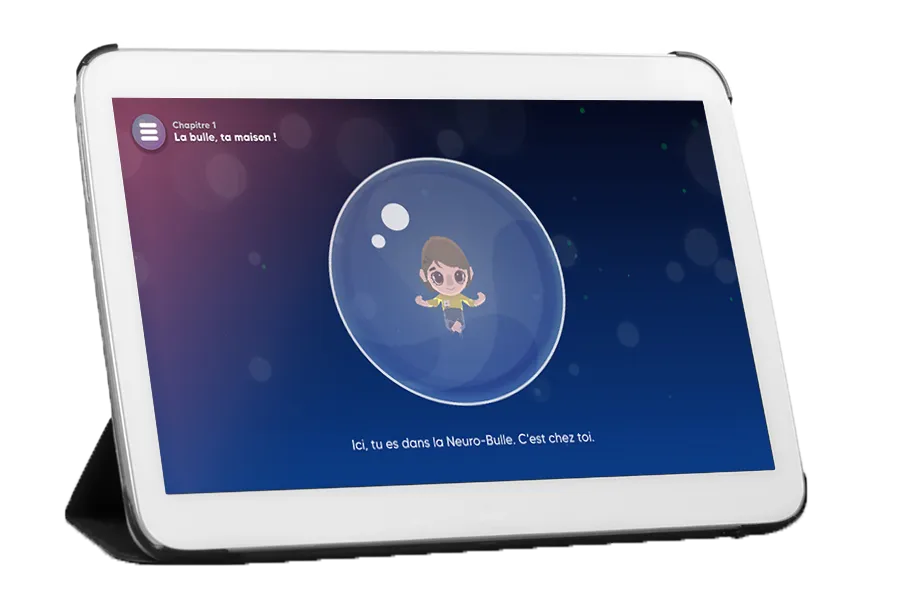
- The child can continue to explore the mysteries of their brain through a captivating story, full of discoveries and playful challenges.
- The Adventure mode, designed for home use, takes the child on a poetic story-game to meet the Babaoos, in a 100% caring environment and at their own pace.
🚀 Missions
- Because care doesn't stop when the child leaves the clinic, Babaoo offers them challenges to complete at home, alone, with their friends or siblings…
- This will strengthen the transfer of skills that you transmit to him, between sessions, and in the continuity of your care.
Help your child master Attention
Short, guided sessions to develop Attention and Self-control, at their own pace.