

Scan to download Babaoo Attention

.svg)


Everything you need to know about Educational psychologists



When should you see an educational psychologist?
Educational psychology explained to parents
Signs I notice in my child.
If the following signals resonate with things you have noticed or questions you have, it may be worthwhile to consult an educational psychologist.
- You notice difficulties concentrating, staying attentive, or a tendency to often be “daydreaming”.
- Some behaviors seem impulsive to you, and you witness overwhelming emotions at school or at home.
- You are worried about a lack of autonomy in learning or homework.
- Your child seems to be struggling with certain school subjects, despite their efforts.
- He/she lacks motivation, shows signs of mental fatigue, or has no pleasure in learning.
- Do you have questions related to learning difficulties (dyslexia, dyscalculia, dysorthographia …) or do you need appropriate support?
- You notice anxiety related to school, stress before assessments, or a fear of failure.
- Your child's self-esteem seems fragile; he/she devalues himself/herself or doubts his/her abilities.
- You want to better understand how your child learns.
The educational psychologist intervenes to help the child learn better, regain self-confidence and adopt effective strategies, in line with their cognitive, emotional and academic needs.
The role of the educational psychologist.
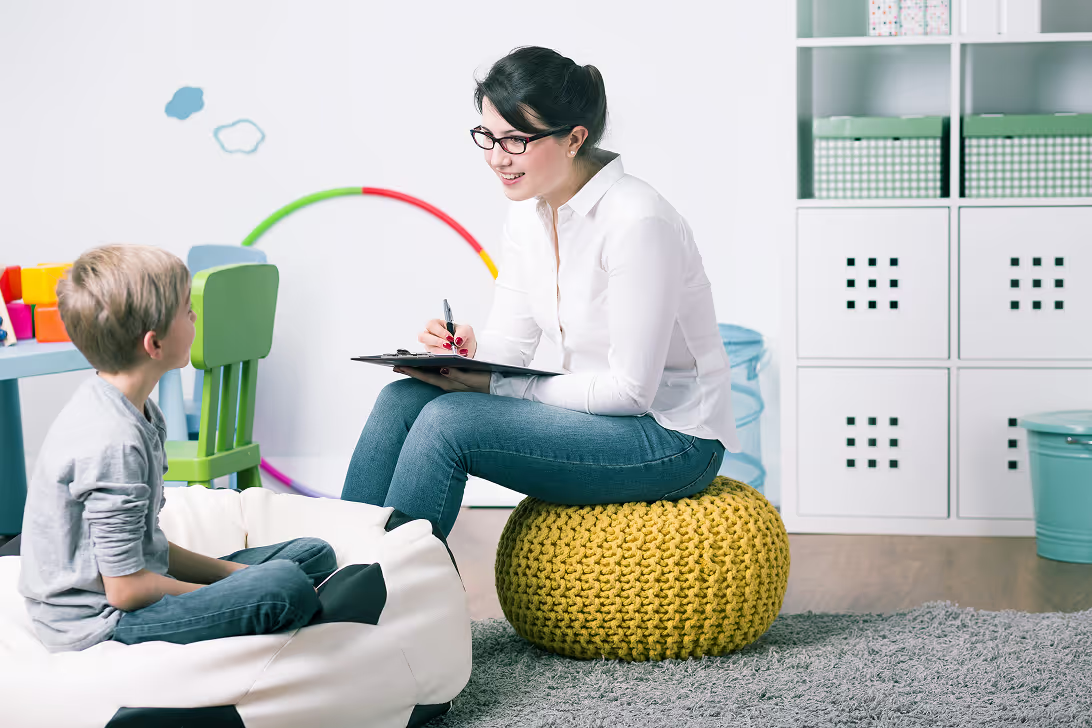
A psychopedagogue is a professional who supports a child's learning and overall development. Their goal is to help children learn better, taking into account their cognitive abilities, emotions, and school environment.He does not make medical diagnoses, but observes, analyzes and supports learning processes to identify obstacles and implement personalized strategies.
The educational psychologist acts as a learning facilitator, working with the child and their family to develop concrete tools to rediscover the joy of learning and progress at their own pace. They will help you better support your child, and you will both gain peace of mind throughout their learning journey! 😊
Objectives of sessions with an educational psychologist.
The educational psychologist supports your child in developing key skills to facilitate their learning, such as:
- Attention and concentration
- The organization and planning of work
- Time and homework management
- Memory and revision methods
- Emotion regulation in a school setting
- Self-esteem and confidence in one's abilities
The sessions focus on practical tools, personalized strategies, and fostering a love of learning. The child is actively involved in their progress, guided to better understand how they learn and to overcome their difficulties in a lasting way.
🎯 Objective: to help the child regain confidence, become autonomous in their learning and develop a method that suits them.
Areas of intervention of the educational psychologist.
The educational psychologist supports children with learning or developmental differences that may impact their school and personal lives. They offer individualized support to better understand their needs and address them in a practical and caring way. They work particularly with children who:
- Learning difficulties: dyslexia, dyscalculia, dysorthographia, dyspraxia …
- Attention Deficit Hyperactivity Disorder (ADHD)
- Difficulties with organization, reasoning, or cognitive flexibility
- High intellectual potential (HPI) requires an adaptation of methods and emotional support
- Neurodevelopmental disorders such as autism spectrum disorder (ASD) without intellectual disability
The goal is to offer individualized and positive support, which values the child's resources while working on their difficulties, to promote their well-being and academic success.
Missions of the educational psychologist.
The educational psychologist intervenes in a comprehensive and individualized manner to help the child progress in their learning and have a better school experience. Their areas of intervention include:
- Methodological support : assistance with organization, planning, memorization, understanding instructions, etc.
- The work focuses on developing cognitive and executive skills: attention, working memory, mental flexibility, inhibition… and on body schema, body image, and self-awareness.
- Work on self-confidence and motivation
- Help with managing emotions and school stress
- Implementing personalized strategies to learn more effectively
- Support for parents and teachers to better understand how the child functions and adapt their school environment
The educational psychologist works in conjunction with teachers, families and other professionals to build an environment conducive to the child's development and success.
Methods and tools used by educational psychologists.
The educational psychologist uses an individualized and playful approach, adapted to each child's profile and needs. Their interventions are based on:
- Targeted observations and discussions to understand the difficulties encountered in learning.
- Concrete and personalized activities : educational games, mind maps, attention exercises, planning tools, etc.
- Educational remediation strategies to overcome learning difficulties (reading, writing, logic, etc.)
- Emotion and stress management techniques adapted to the school environment
- A gradual approach towards autonomy , by strengthening self-assessment and methodology skills
- Close collaboration with parents and teachers to ensure continuity in learning and daily adjustments
The goal is to make the child an active participant in their learning, by giving them practical, concrete tools adapted to their way of functioning.
How to prepare my child for a visit to the educational psychologist?
Educational psychology explained to children, by children!
What is an educational psychologist?
It's a bit like a coach for learning!
The educational psychologist will help you concentrate better, get organized, retain your lessons, and complete your homework. They seek to understand how your brain learns best, to help you find tips and methods that suit you. With their help, you'll learn to learn differently, without stress, and by regaining your self-confidence!
What happens during a session with an educational psychologist?
- Discover how you learn!
🧠The educational psychologist starts by talking with you to better understand what you like, what you have problems with at school, and how you learn your lessons. - Become aware of your strengths and what you can improve!
💪 Everyone has their superpowers! The educational psychologist helps you see what you already do very well and what you can still improve, such as attention, memory or organization. - Train while having fun!
🎲You will play games, do activities, and take on fun challenges to help you concentrate better, remember, or understand more easily. - And then what?
🚀You'll leave with simple and effective tips to try at home and at school to help you learn more easily and with more fun.
Where does an educational psychologist work?
An educational psychologist can work in a private practice, in a school, or in a specialized support center for children. They may work in conjunction with teachers and other professionals (such as speech therapists or psychologists).
They are there to support you throughout your academic journey, both in and out of school, so that you can learn with confidence.
Which Babaoos will you discover with the educational psychologist? What games will you play?
At the educational psychologist's office, you'll meet the 5 Babaoos , your brain's allies ! Thanks to them, you'll learn to concentrate better, get organized, memorize, and stay confident … all while having fun! Here are the Babaoos you'll team up with:
- Inhi is the expert in controlling actions and thoughts. Inhi will teach you to pause and think before you act!
- Atteni is the guardian of your attention. With Atteni, you will learn to focus your attention in the right place, at the right time, for as long as it takes.
- Memtra is your ally whenever there's a lot of information involved. Thanks to Memtra, you'll learn to manipulate words, images… without losing them along the way!
- Flexi is the most zen of the Babaoos. If you lose your composure when the instructions change or your first idea doesn't work, don't panic! Flexi will teach you how to adapt to find another solution.
- Plano is always there to help you solve problems. Plano will teach you how to organize your work, step by step, and how to control each step. He's undoubtedly the most organized of the Babaoos!
Day in the life of an educational psychologist.
Behind the scenes of educational psychology.
The challenges of being an educational psychologist.
The educational psychologist is a bit like a personal learning coach!
They help children better understand their learning style, overcome academic difficulties, and boost their self-confidence. Thanks to their knowledge of pedagogy, psychology, and cognitive science, they develop customized strategies to help each child become more independent, motivated, and confident at school. But this profession requires facing several daily challenges:
- 🕒 Taking the time to assess
Before supporting a child, the educational psychologist must first fully understand how they function: their strengths, weaknesses, and learning habits. This requires careful observation, time for discussion, and the use of appropriate tools. - 🔄 Ensuring the transfer to the child's daily life
One of the major challenges is ensuring that the strategies learned in therapy sessions are actually put into practice at school and at home. The educational psychologist therefore supports the child, the parents, and sometimes the teachers, so that the new habits can become ingrained in daily life. - 🎮 Maintaining a child's engagement:
Working on attention, memory, or planning can be demanding. The educational psychologist must be creative in offering fun and engaging activities to maintain the child's motivation over time.
Executive Functions: why work on them in educational psychology?
Executive functions are like the brain's flight controllers: they help children manage their attention, emotions, actions, and reasoning. In educational psychology, strengthening them allows children to learn more smoothly, in a more organized way, and with greater confidence. Here's why they are so important:
- 💡 Inhibitory Control: Why strengthen it in educational psychology? When a child acts too quickly, they may have difficulty concentrating, listening, or completing a task. By strengthening inhibitory control, they learn to pause before acting, to channel their actions or words, and to make more appropriate choices.
- 💡 Attention : Why improve it in educational psychology? Difficulty staying focused? Frequent forgetfulness? Attention is central to learning. Working on this function helps children focus on what's important, better follow instructions, and complete tasks.
- 💡 Working Memory : Why stimulate it in educational psychology? It allows children to temporarily retain information (such as instructions or a step in a reasoning process). By developing it, they become more independent, better understand complex instructions, and improve their ability to organize their ideas.
- 💡 Cognitive Flexibility : Why develop it in educational psychology? Some children struggle to change strategies or adapt when a method doesn't work. By strengthening their flexibility, we help them adjust to unexpected events, manage mistakes, and think differently. This fosters their creativity and perseverance.
- 💡 Planning and Organization : Why Focus on These Skills in Educational Psychology? Planning a task means knowing where to start, what to do next, and how to proceed. Many children feel lost when faced with complex instructions or homework. By developing these skills, educational psychologists teach them to structure their ideas, materials, and time, enabling them to progress methodically and efficiently.
Babaoo: the app that helps educational psychologists work on Executive Functions.
A tool developed with cognitive neuroscience experts.
Babaoo supports you.
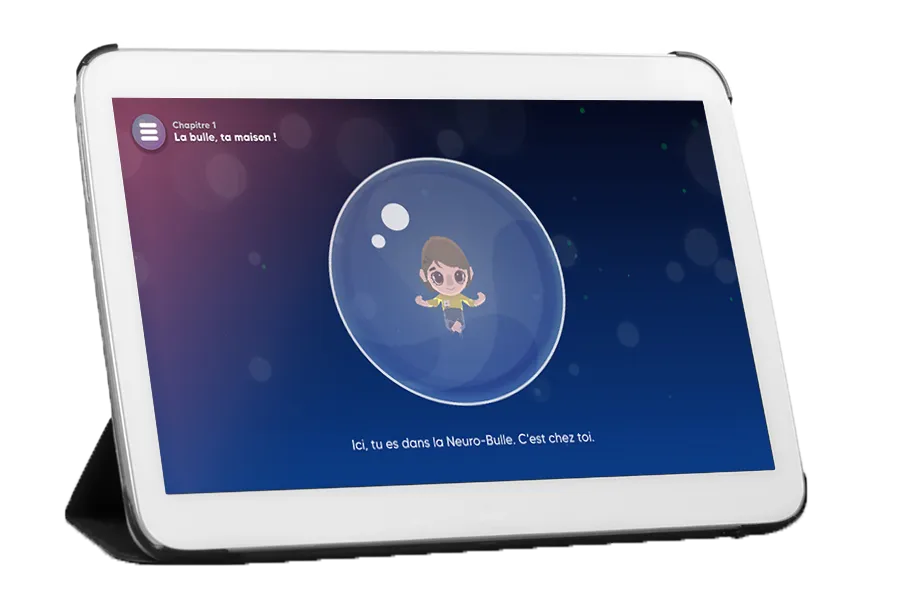
Babaoo is a fun and scientifically rigorous application designed to stimulate executive functions and develop metacognition in neurotypical and neurodivergent children. It integrates easily into educational and psychological practices to help children learn how to learn and better understand their cognitive processes, while also motivating them. Babaoo offers a structured and engaging learning path, ideal for complementing sessions with:
- Metacognitive content integrated into short sessions, to help the child better understand how they learn and how they can progress.
- Targeted mini-games to raise awareness of executive skills, automate cognitive reflexes and build self-confidence as progress is made.
- Missions to be carried out in real life, between sessions or at home, to promote the concrete transfer of learning into the child's daily life (school, home, activities).
🎯 Objective: to strengthen autonomy, confidence and learning effectiveness, while making cognitive work motivating and concrete.
Features that educational psychologists will find useful.
Babaoo offers several modes designed to enrich educational psychology sessions and extend support between appointments, while keeping the child active and motivated.
🎯 Training Mode
- Targeted mini-games to progressively strengthen each Executive Function (inhibition, attention, working memory, flexibility, planning), according to each child's profile.
- A progressive level of difficulty to promote success, motivation and self-esteem.
🧠 Adventure Mode
- A narrative and immersive universe that captures children's attention and engages them in cognitive work without academic pressure.
- An approach that stimulates metacognition: children discover how their brain works, become aware of their learning strategies and learn to adjust them.
🚀 Missions
- Concrete challenges to be carried out in real life (school, home, daily life) to promote the transfer of skills worked on in session.
- Active involvement of parents and teachers, to support the development of autonomy and strengthen coherence between different learning environments.
📊 A tool for collaborative care
Babaoo can be used in conjunction with other professionals: teachers, speech therapists, occupational therapists… It thus becomes a shared support which facilitates the monitoring and harmonization of strategies around the child.
Help your child master Attention
Short, guided sessions to develop Attention and Self-control, at their own pace.